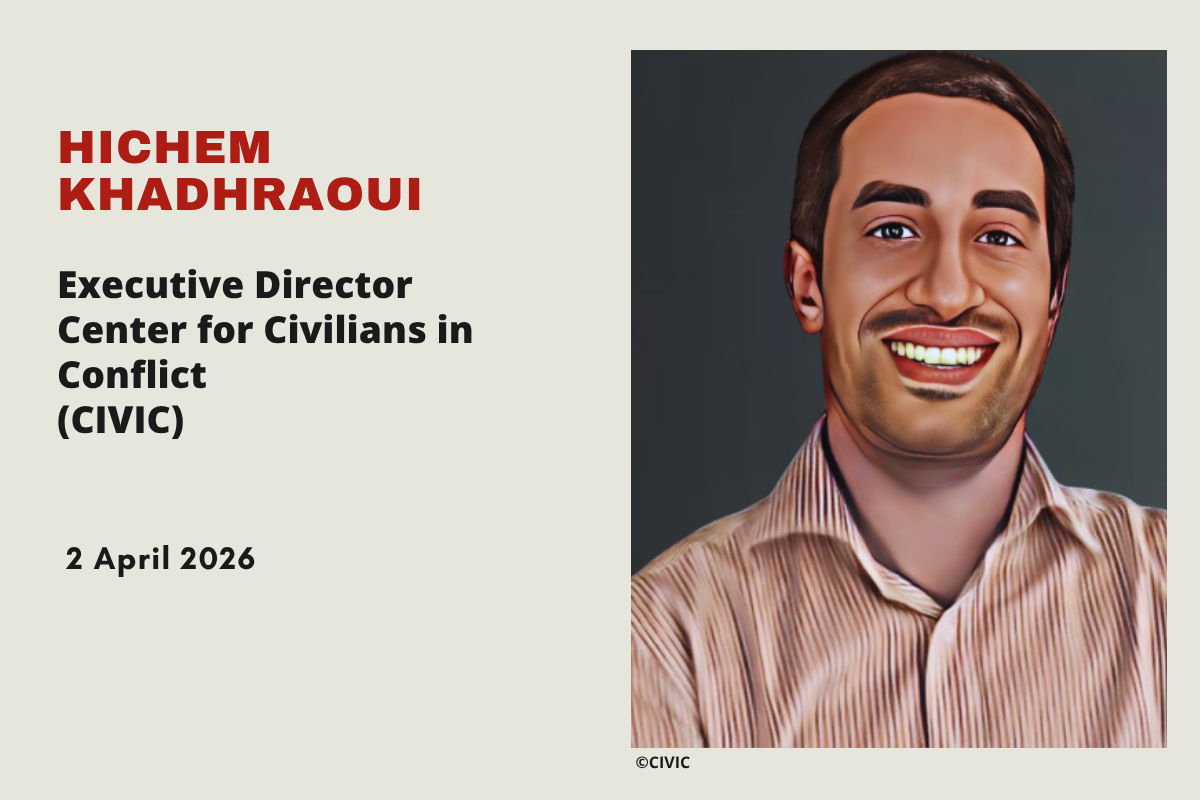
The interview | Hichem Khadhraoui

 |
|
I am most proud of our colleagues. They combine deep technical expertise with the ability to operate in highly complex and often constrained environments, engaging directly with armed actors, authorities, and communities. What distinguishes CIVIC is not only what we do, but how we do it—grounded in field presence, trust-building, and a constant focus on tangible impact for civilians. Our teams consistently translate policy into practice, which is ultimately what saves lives. Our world witnesses a massive increase of conflicts with civilians harmed on a daily basis, I am proud that we contribute to concretely improving their safety and protection.
 |
|
Geneva offers a unique concentration of humanitarian, diplomatic, and policy actors, and we engage across all these layers. I consider Geneva as an innovative platform to connect operational realities from the field with global policy discussions, ensuring that protection of civilians remains anchored in practice. We actively convene dialogues with states, UN agencies, and other stakeholders, while also leveraging Geneva’s diplomatic tradition to engage on sensitive issues such as civilian harm mitigation, military practices, and accountability.
 |
|
For us, innovation is not a standalone activity but a transversal approach. We innovate in how we engage with military and security actors, moving beyond traditional advocacy to more operationally grounded dialogue, for example engaging with Military planners at strategic level to reduce civilian harm. We innovate in our programming by linking field evidence with policy influence, and in our fundraising by diversifying partnerships and aligning with emerging donor priorities. Ultimately, innovation is about adapting to the evolving nature of conflict, particularly in urban warfare, partnered operations, and the use of new technologies.
 |
|
What has been particularly inspiring is the increasing openness of military actors to engage on civilian harm mitigation in a more structured and operational way. We are seeing a shift from normative commitments to practical implementation—through tracking mechanisms, training, and doctrine. This creates real opportunities to reduce harm, but also highlights the importance of sustained dialogue and trust-building.
 |
|
Connect. Convene. Protect.